24. (I Got A Woman Crazy For Me) She's Funny That Way
25. Bye Bye Baby Blues
More Info:
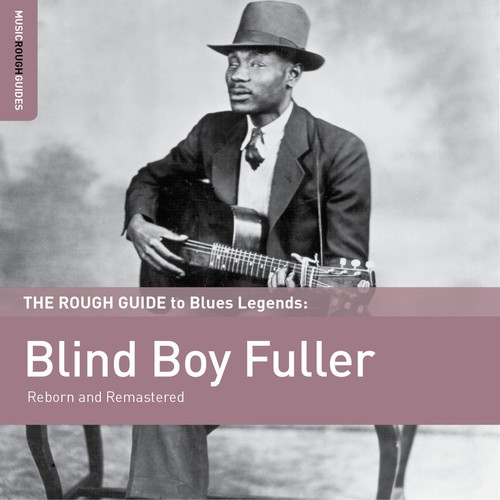
Blind Boy Fuller was only 33 when he died, but during his short but prolific recording career he became one of the most influential and best-selling bluesmen of the pre-War period. Inspired by the legendary blues and evangelist guitarist Rev Gary Davis, Fuller developed a ragtime influenced fingerstyle guitar technique typical among East Coast bluesmen, which beautifully complimented his gritty and expressive voice. Armed with his steel National resonator guitar, Fuller had a huge repertoire of songs ranging from ragtime, hokum and traditional blues to gospel and other popular tunes of the time.
Reviews:
Born Fulton Allen in rural North Carolina on 10 July 1907, he was one of ten children and had a very poor and tough upbringing. As a boy learning to play the guitar, he was influenced by the region’s rich and varied musical traditions, and eventually started plying his trade on street corners and other hang-outs where the African-Americans in the area worked. The life of the street performer was forced upon him when during his mid-teens he began to lose his eyesight and playing the guitar and singing became the only way that he could make a decent living. Whilst singing and playing outside a tobacco warehouse during the winter of 1934-1935, Fuller was approached by the white entrepreneur and record retailer J.B. Long, who asked him to come and see him at the local store. This turned out to be his big break, as it was Long who arranged for Fuller to travel to New York City to record in 1935 for the American Record Corporation (ARC), along with his fellow guitar mentor Gary Davis and the albino washboard player known by the name of Bull City Red. Fuller recorded twelve tunes, and the issued discs sold very well, establishing him as a distinctive musical voice, inheriting the Carolina blues tradition but doing it his way. Fuller went on to record over 120 songs for a variety of labels ranging from his big selling up-tempo rag ‘Step It Up and Go’, and hokum classics ‘Get Your Yas Yas Out’ and ‘Truckin’ My Blues Away’, to soulful blues numbers like ‘Lost Lover Blues’, all of which are featured on this album. Some may argue that Fuller didn’t possess the virtuosic flair of the likes of Blind Blake, Willie Walker or Gary Davis; however, the melodic combination of his vocal and guitar give a completeness that distinguishes him from his contemporaries. Fuller’s music is full of honesty and draws on his experience as a blind and underprivileged black person. Living the hard life of the bluesman (who also spent time in jail for shooting and wounding his wife in the leg), Fuller’s illness and early death in 1941 have been widely ascribed to excessive drinking. When people say that blues singers in the 1930s sounded the same, they forget about the music of Blind Foy Fuller which is brimming with wit and soulfulness. The unique sound of his National steel guitar gave voice to his strikingly original and energetic guitar arrangements, which have been an inspiration to countless guitarists ever since. In a similar way to Robert Johnson in the Delta, Blind Boy Fuller was able to bring together the many different styles of the Piedmont region and serve them up in a way that encapsulates the essence of the East Coast blues.